

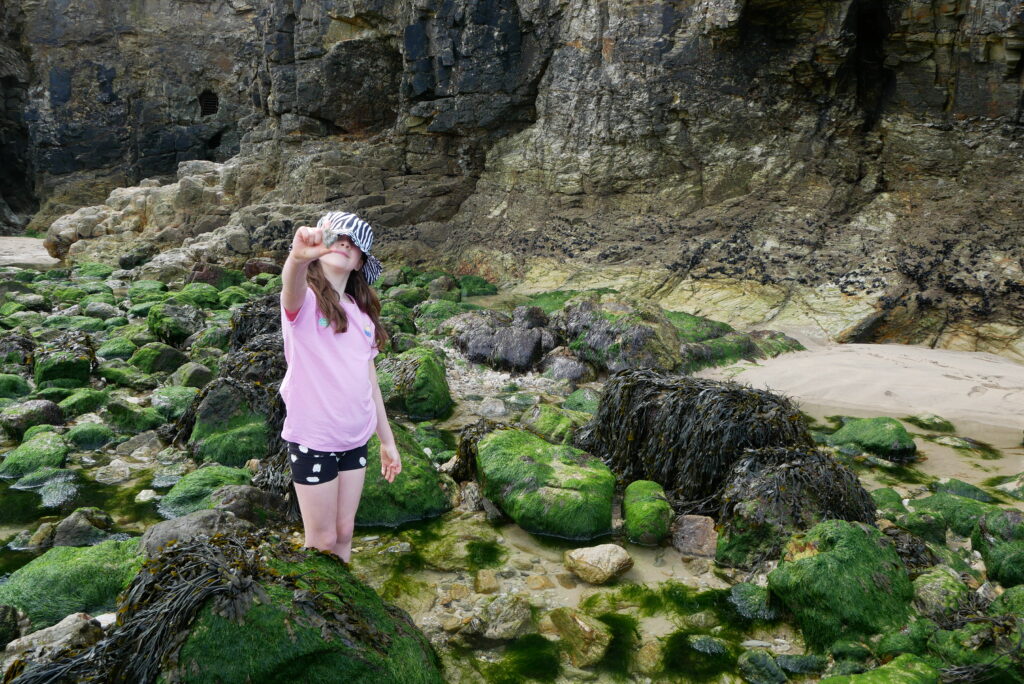
When the tide pulls back and Perranporth beach starts to reveal its vast stretch of sand, it’s a great time to grab your sturdiest footwear and head for the rocks to see what the sea’s left behind for you.
From the vast, deep pools around Droskyn to the smaller pockets up at Flat Rocks, there’s plenty to be explored along Perran’s three-mile stretch of beautiful sand. But it’s crucial to do it properly and respectfully, so we can protect our beautiful, fragile wildlife.
What you’ll need
Bring along some buckets or clear Tupperware instead of nets: these are much safer for collecting shells and other little treasures. The fine mesh of nets can cause harm to smaller, more delicate creatures. Plus the sweeping motion can dislodge eggs and uproot plants, so it’s best to leave the nets at home. Please try to keep all creatures in the water where they’re happy and, most of all, don’t try to force limpets and anemones from their locked-in positions.
You can use your hands to gently turn rocks over and inspect seaweed, but always approach with caution. Please always return rocks to their original position, as the underside could serve as a specialised and fragile home for marine life.
Direct sunlight on shade-loving creatures/habitats is a big no-no. In general, move slowly and with care whenever you’re exploring rockpools. Timing is everything The best time to go rockpooling is around two hours before low tide, especially if it’s an extreme tide. This gives you plenty of time and ample little pools to explore before the tide turns.
Be fully aware of tide times as some areas of the beach can disappear under water completely – and alarmingly quickly!
If you want to have a look at where the tide’s lying right now, we have two great live webcams in Perranporth:
- Seiners Arms: seiners.co.uk/web-cam
- The Watering Hole: thewateringhole.co.uk/webcam
What to look out for
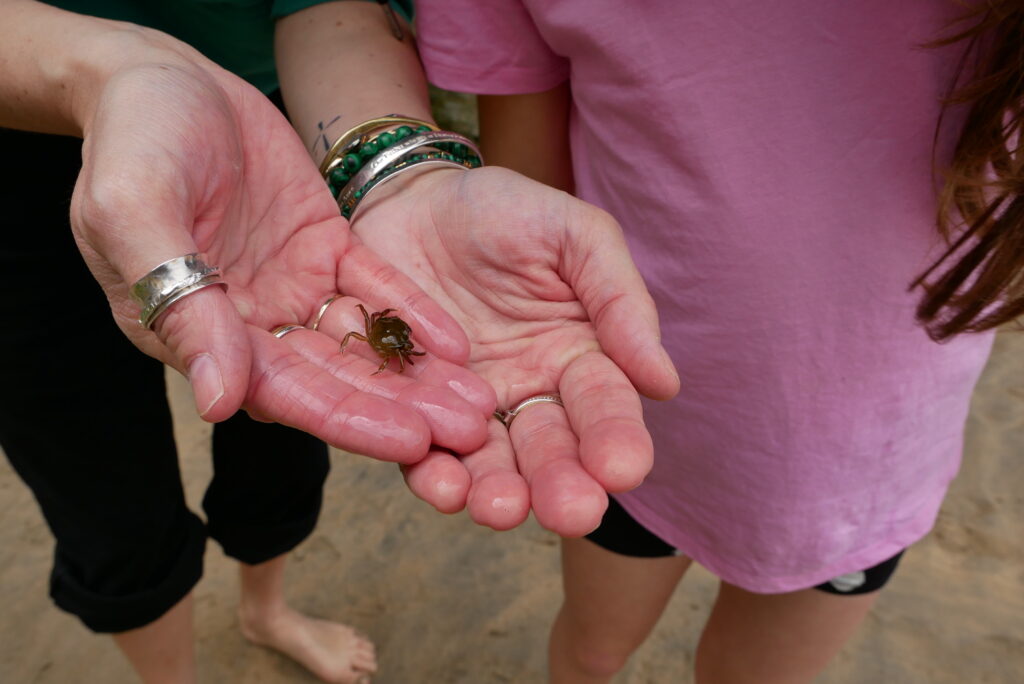
There’s really no end to the creatures you might discover while rockpooling but you’re most likely to encounter crabs, snails, starfish, shrimps and anemones. Common blennies (sometimes called shannies) are regular sightings in our rockpools, as are beadlet and strawberry anemones. You will probably also spot plenty of shore crabs, usually green in colour and very common in Perranporth’s pools.
Also, look out for rock gobies. These little fish are particularly good at camouflaging themselves with their mottled appearance, so they’re hard to spot. But stay still long enough and you might be lucky. Have fun, be gentle and, of course, wear a hat/highfactor suncream if it’s sunny!
This article was developed alongside Perranporth Marine Conservation Group, a group of likeminded volunteers who are passionate about protecting and conserving Perran’s natural beauty. They run regular Rockpool Rambles, so follow them on Instagram to stay updated on sessions. With their expert eye along for the ride, you’re bound to find way more than you could ever hope to unearth on your own.